Before the monsoon season arrives in Singapore, landed homeowners should look beyond the obvious roof and gutter checks. Heavy rain, strong winds and higher humidity can expose small weaknesses in the home’s exterior, drainage and interior fixtures. For landed properties, a short inspection before the wet season can help reduce avoidable water ingress, surface damage, slippery areas and nuisance issues that often become harder to deal with once the rain starts regularly.
The key is to inspect the home systematically: from the roof line and external walls to drains, windows, outdoor fittings and the rooms most likely to be affected by damp. In a landed house, one neglected problem can spread quickly, especially where there are balconies, service yards, garden edges, roof access points and perimeter drains. A focused property maintenance check is usually more effective than waiting until a leak or blockage appears during a storm.
Start with the roof, flashing and visible upper structure
The roof is one of the first places to inspect before monsoon weather sets in. Homeowners should look for cracked, shifted or missing roof tiles, loose ridge pieces, damaged flashing around roof edges and openings, and any signs of staining on ceilings beneath roof areas. Even small defects can allow rainwater to enter during prolonged wet weather.
For landed homes with accessible upper levels, also check:
- Roof valleys where water tends to collect
- Skylight surrounds and roof joints
- Ceiling stains, bubbling paint or peeling patches indoors
- Rust or water marks near roof penetrations and fixtures
If you see recurring damp marks after rain, it is worth arranging a proper assessment rather than assuming the issue is minor. Water can travel along beams or ceiling voids before appearing in another room.
Inspect gutters, downpipes and external drainage paths
Blocked gutters and downpipes are a common problem before the rainy season. Leaves, twigs, roof debris and nesting material can restrict water flow and cause overflow at the edges of the house. In a landed property, this can lead to external wall staining, pooling around the foundation and water entering through weak points.
Check that:
- Gutters are clear and firmly fixed
- Downpipes are not cracked, detached or partially blocked
- Drain grates and inspection points are free of debris
- Water flows away from the home instead of collecting near walls
If there is a garden, driveway or side passage, pay attention to where surface water drains after light rain. Slow drainage now often becomes obvious flooding during heavier storms.
Check windows, doors and sealant lines
Rain can enter through the smallest gaps around windows and doors, especially where sealant has aged or frames have shifted slightly. This is particularly important for landed homes with more external exposure than a typical apartment. Inspect the edges of sliding doors, casement windows, balcony doors and any areas where previous sealant has become brittle, cracked or detached.
Useful points to inspect include:
- Rubber seals and weather strips that are worn or flattened
- Cracks in sealant around frames and sills
- Difficulty closing doors or windows fully
- Water marks on nearby flooring, skirting or walls after rain
It is also sensible to check whether outdoor-facing windows close tightly. Poor alignment can let in rainwater and wind-driven moisture even when the glass itself is intact.
Review exterior walls, paintwork and signs of damp
Before monsoon season, inspect the exterior walls for hairline cracks, flaking paint, discolouration and moss or algae growth. These may seem like cosmetic issues, but they can indicate persistent moisture exposure or allow water to work into the surface over time. Landed homes with side walls, boundary walls and semi-covered areas are especially exposed to weathering.
Inside the house, look for early damp indicators such as:
- Musty odours in bedrooms, storerooms or under stair areas
- Bubbling paint or soft plaster
- Dark patches near corners, ceilings or wall junctions
- White powdery residue on walls or masonry
These signs do not always point to one single cause. They may be linked to rain entry, poor ventilation or lingering moisture in the building fabric. A careful inspection helps identify where to focus repairs.
Do not overlook balconies, patios and service yards
Balconies, patios and service yards often collect water and debris faster than other areas. In landed homes, these spaces may have floor traps, drainage points, external taps, exposed fittings and storage items that can be affected by rain. If drains here are blocked, water can back up and create slip hazards or seep into adjoining rooms.
Inspect these areas for:
- Cracked floor tiles or loose grout lines
- Slow-draining floor traps
- Rust on railings, brackets or light fittings
- Standing water after rainfall
- Stored items touching walls or blocking airflow
Where possible, keep these spaces uncluttered before the wet season so any leak, stain or drainage problem is easier to spot early.
Check plumbing fixtures and outdoor water points
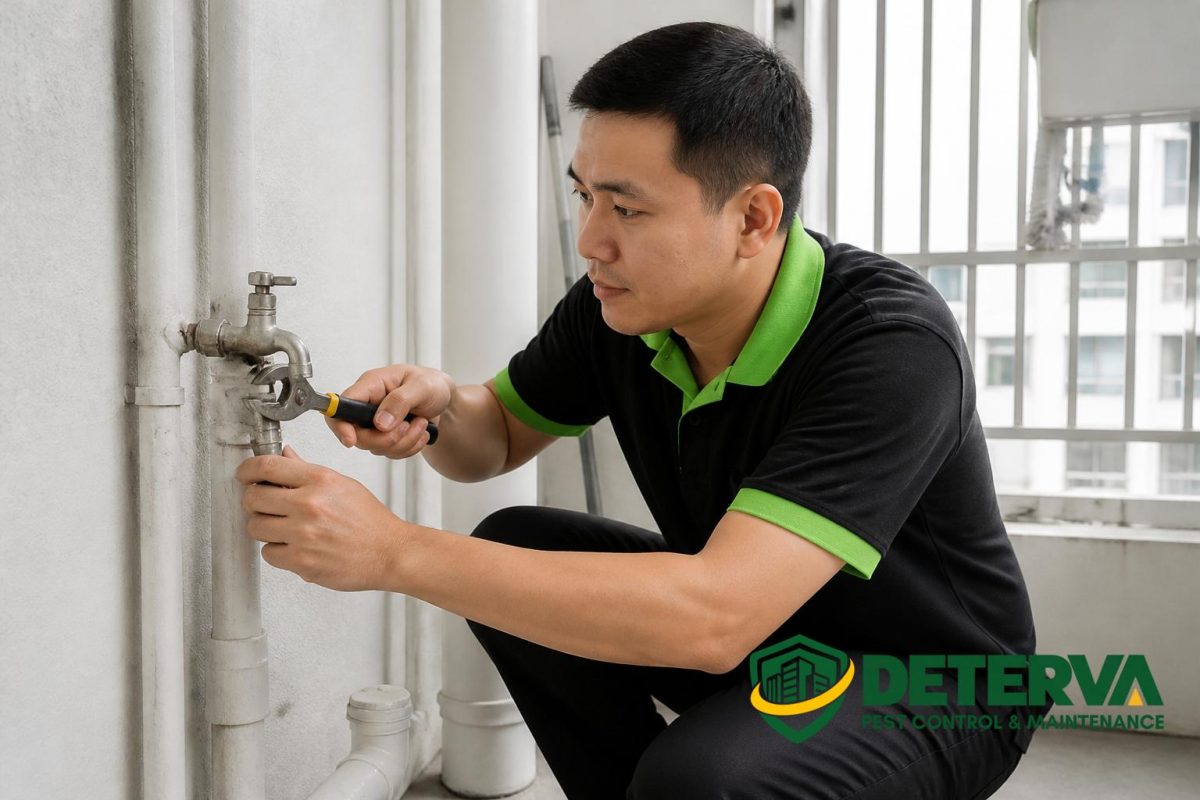
Monsoon season can make plumbing problems more noticeable because damp areas become harder to dry out. Before the rainy period, inspect taps, hose bibs, outdoor sinks, pump points and visible pipe runs around the home. Look for dripping joints, loose fittings, corrosion and water staining at pipe connections.
It is also worth checking whether any outdoor plumbing areas are vulnerable to rain splash or pooling. A small leak near a wall or floor edge may not seem urgent in dry weather, but repeated exposure can damage finishes and invite mould growth. If water pressure seems irregular or a fixture is already leaking, address it before prolonged wet weather makes the issue worse.
Look at ventilation, mould-prone corners and internal storage areas
High humidity during the monsoon can make enclosed spaces feel damp for longer. Rooms with limited airflow, such as store rooms, under-stair areas, wardrobes and utility spaces, are worth checking. These areas may not show visible water entry, but they can still develop mould or trapped moisture if air movement is poor.
Focus on:
- Wardrobes against external walls
- Cardboard boxes, books and soft furnishings stored on the floor
- Dark corners with limited airflow
- Areas where condensation appears on surfaces
If you notice a persistent musty smell, that is a sign to inspect both the room conditions and nearby exterior surfaces. Prevention is easier than trying to dry out damaged materials after repeated wet weather.
Plan minor repairs before the first heavy downpour
Once the rain season starts, small defects can become recurring problems. Before then, review what needs simple maintenance: resealing gaps, clearing drains, tightening loose fittings, replacing worn seals, patching minor cracks and securing external fixtures. For landed homeowners, these relatively small jobs can prevent larger repair work later.
A useful approach is to separate issues into three groups:
- Urgent – active leaks, blocked drainage, unsafe loose fittings
- Soon – worn sealant, cracking paint, slow drainage, early damp signs
- Monitor – minor staining or surface wear without current water entry
That kind of prioritisation helps you decide what to fix before the weather worsens and what can be observed over time.
WhatsApp Deterva Pest Control & Maintenance Singapore for an assessment or quotation for property maintenance. Share the fault or job description, your property type and photographs where useful.
Conclusion
For landed homeowners in Singapore, monsoon preparation is mostly about inspection, early repair and preventing water from finding weak points in the property. Roofs, gutters, drains, windows, walls, balconies and utility spaces all deserve attention before the heavy rain begins. A clear inspection routine can reduce the chances of leaks, dampness and avoidable maintenance issues during the wetter months.
By checking the home early and addressing obvious defects promptly, you protect both the structure and the day-to-day comfort of the household. In Singapore’s climate, timely property maintenance is often the simplest way to keep small issues from becoming larger ones.
Choose Deterva Pest Control & Maintenance Singapore
Deterva Pest Control & Maintenance Singapore specialises in pest control, pest management, and property maintenance solutions that help homeowners and businesses manage pest activity and maintain their premises. We serve HDB, condominium, landed, and commercial properties across Singapore, offering services such as bed bug pest control, termite control, and preventive pest management. Our mattress cleaning and sofa cleaning services also help maintain cleaner and more comfortable indoor spaces.
Our property maintenance services cover services such as plumbing, aircon servicing, electrical services, and handyman support for everyday property maintenance needs. Whether dealing with pest infestations, maintenance issues, or repairs, we assess the property’s needs and recommend practical solutions suited to the situation. By addressing existing concerns and identifying potential problems, we help residential and commercial property owners keep their premises in good condition.
If you are looking for suitable pest treatment or preventive maintenance solutions, visit our blog for practical advice or view our completed projects to learn more about the work we carry out for Singapore properties. Contact us via WhatsApp at +65 8241 0032 to enquire about available services, discuss your property’s needs, and request a quotation.
Frequently Asked Questions
How often should landed homeowners inspect the property before monsoon season?
It is sensible to do a full check before the wetter months begin, then recheck after a few heavy storms if the home has known weak points. Homes with older roofs, external walls or drainage lines may need more frequent observation.
Which areas are most likely to cause problems during heavy rain?
Roof edges, gutters, downpipes, window seals, balcony drains, external wall cracks and service yard drainage are common trouble spots. These areas handle direct weather exposure and can show issues quickly when rainfall becomes frequent.
What signs suggest a maintenance issue should be fixed quickly?
Active leaks, overflowing drains, standing water near the house, water stains indoors, peeling paint and persistent damp smells are all signs that should not be ignored. They often indicate a problem that may worsen during the monsoon.